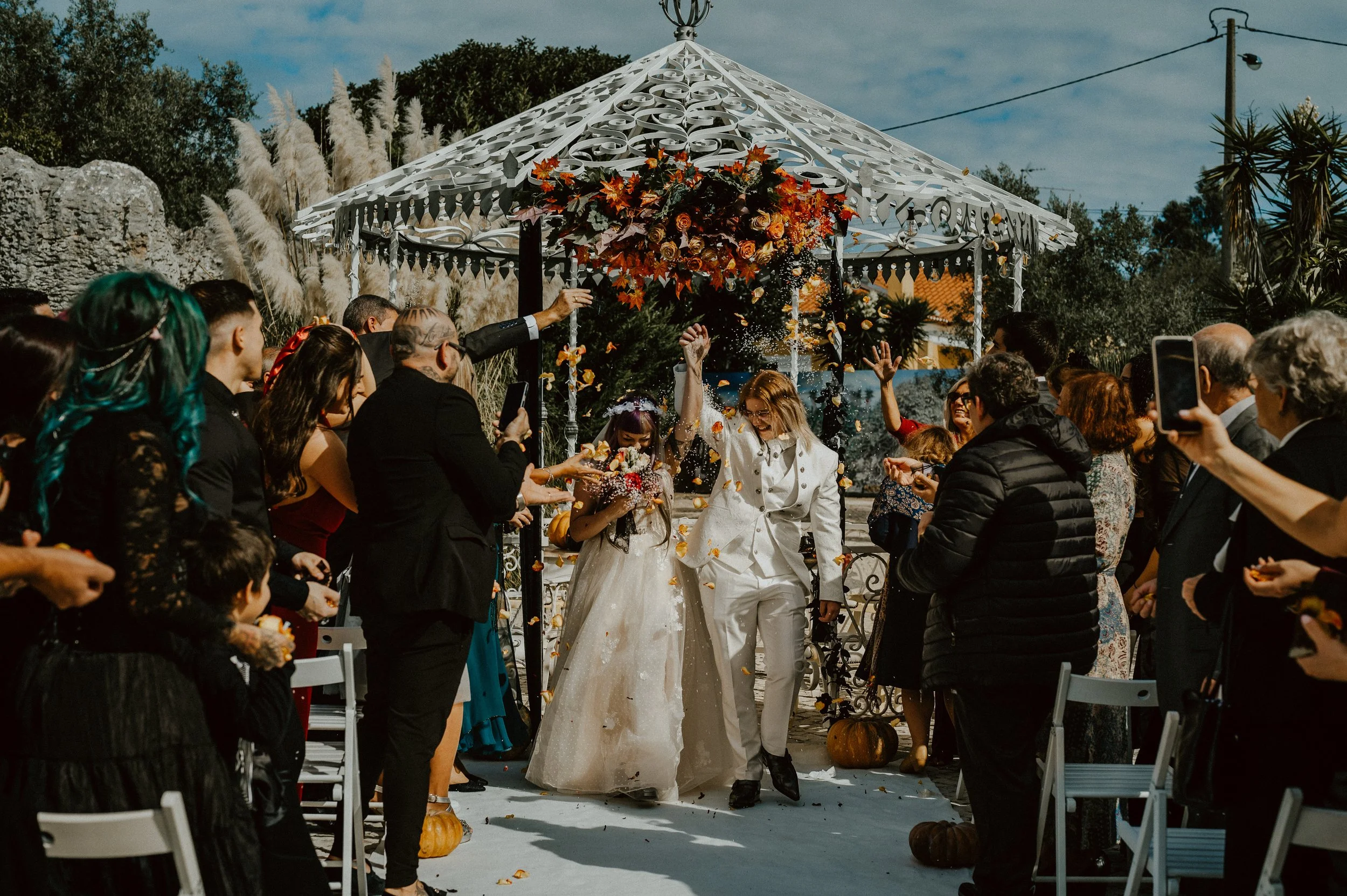
Portugal Destination Wedding: How to Plan a Wedding in Portugal from Abroad | A Realistic Guide for International Couples
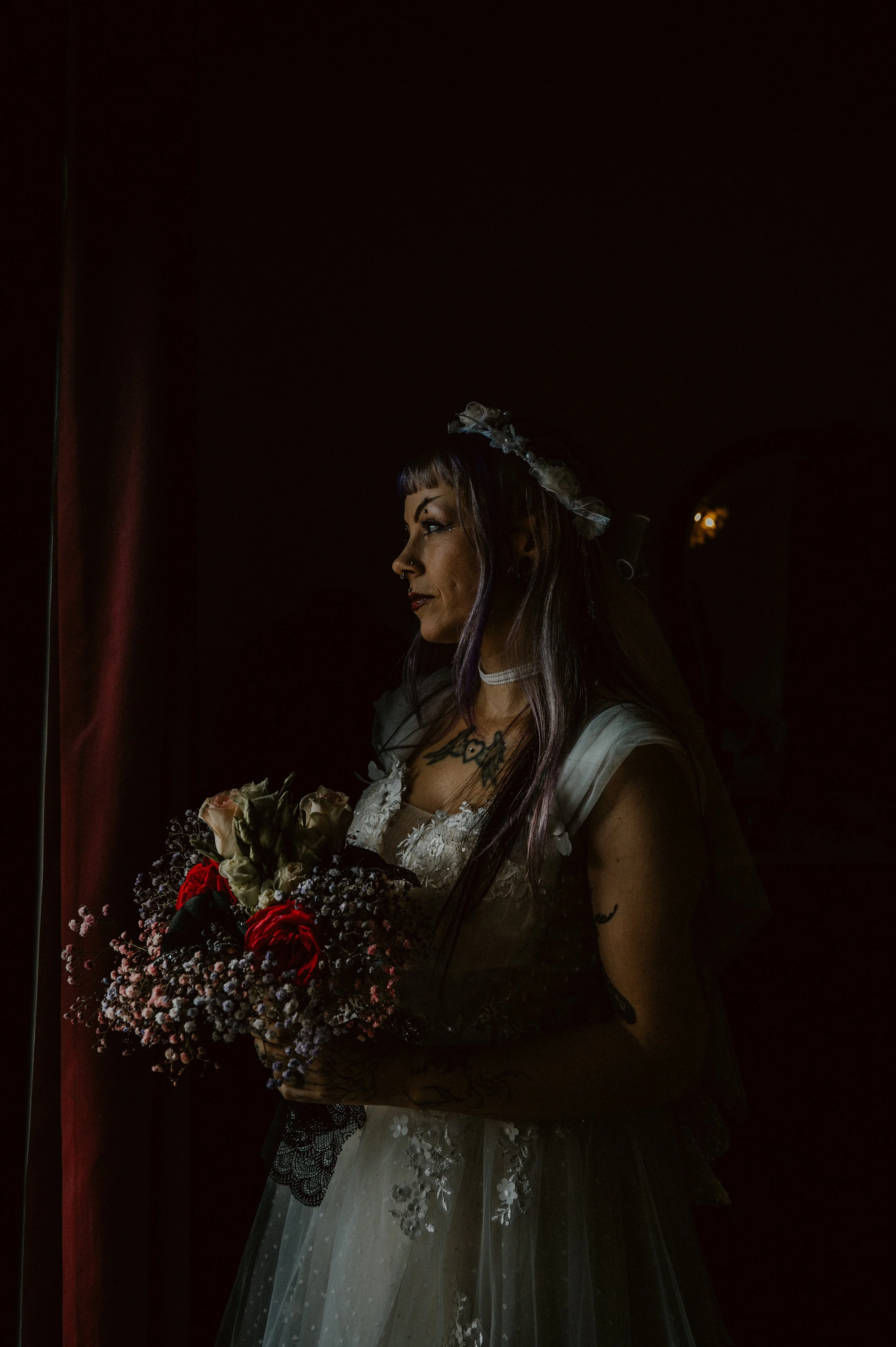
2024 © Patricia Nunes Photography
Summary
Planning a destination wedding in Portugal from abroad is entirely doable but it requires a different mindset than planning a local wedding. This guide covers the legal steps for international couples, how to build a trustworthy vendor team remotely, realistic timelines, guest logistics, and how to make sure your wedding actually feels like you despite the distance. Whether you're based in Canada, the UK, the US or anywhere else in the world, this article gives you the honest, grounded information you need to move forward with clarity.
There's a particular kind of stress that comes with planning a wedding in a country you don't live in.
And it's not just the logistics, though those are real. It's the not-knowing. The wondering if the venue looks as good in person as it does in photos. The trusting a stranger with one of the most important days of your life, from thousands of kilometres away, across a time difference, in a language that might not be yours.
We've worked with couples from California, Canada, the UK, Australia. And almost all of them describe the same feeling at some point during the planning process: am I doing this right?
This guide won't promise you it's easy. But it will tell you what actually matters, what to be extra aware of and what you can simply let go.
First Things First: The Legal Reality
Let's get this out of the way early because it's the question that causes the most anxiety.
Can you legally get married in Portugal as a foreign national?
Yes. Portugal welcomes international couples and the process, while paperwork-heavy, is straightforward if you start early enough.
What you'll generally need:
Valid passports
Birth certificates (apostilled and officially translated into Portuguese)
Certificate of no impediment (or equivalent document from your country confirming you are free to marry)
Proof of residence
Divorce decree if previously married (also apostilled and translated)
The apostille process is the part that trips people up most often. An apostille is essentially an international certification that makes your documents legally recognised in another country. In Canada, apostilles are issued through Global Affairs Canada. In the UK, through the Foreign, Commonwealth & Development Office. The process takes time, so factor it in early.
You'll also need to decide between a civil ceremony (conducted at a registry office in Portugal) or a religious ceremony (which has its own requirements depending on your faith). Many international couples opt for a civil ceremony for legal purposes and a symbolic ceremony at their chosen venue (a setup that gives you far more creative freedom).
Start the legal process at least 6 months before your wedding date. Some documents have expiry dates. Some translation offices have long wait times. Build in buffer and be extremely aware of expiry dates for each document.
Building Your Vendor Team from the Other Side of the World
This is where planning a wedding in Portugal from abroad can get genuinely complicated.
You can't pop into a venue for a coffee. You can't walk through a quinta on a Tuesday afternoon to see how the light falls at 6pm. You're working from photos, videos, reviews, and basically your gut.
A few things we've watched work well for couples in your situation:
Read reviews on multiple platforms
Google, Casamentos.pt (the Portuguese equivalent of The Knot), Wedding Wire. Look for reviews written by international couples specifically as they'll flag things that actually matter to you, like communication responsiveness, English fluency, and whether the vendor made them feel held even from afar or just like another paycheck.
Pay attention to how vendors communicate before you book
Response time, the quality of their answers, whether they actually read your emails or send templated replies, all of this tells you more than their portfolio does. A vendor who takes 3 weeks to answer your first enquiry is not going to be easier to reach in the weeks before your wedding. One that copy and paste the same standard reply without acknowledging your particular concerns or questions is not as invested in your day as you are.
Video calls are non-negotiable
Any vendor worth working with will make time for a proper conversation. Not just a quote email. A real call where you can ask questions, get a feel for who they are, and decide if this is someone you actually want present on your wedding day. But even if time zones or your agenda make it hard to actually jump on a video call, pay attention to how much effort and detail they add to any email or message you exchange. Are they interested in knowing you or your vision for your day? Are they detailed in their replies? Do they make you feel seen and taken cared of? Do they articulate themselves well?
Trust your instincts about human connection
This is something we feel strongly about. Numbers, packages, pricing, those are all secondary. The real question is: does this person care? Do they see you, or do they see just another booking? You can often feel the answer to that within the first ten minutes of a conversation.
A Realistic Planning Timeline
Planning a wedding in Portugal from abroad generally requires more runway than a local wedding. Here's a loose structure that works for most international couples:
12–18 months out: Secure your venue. Portugal's most sought-after quintas book up fast, especially for peak season (May–October). If you have a specific date or specific type of space in mind, this is not something to leave for later.
10–12 months out: Book your photographer, catering, and any entertainment or live music. These tend to go next.
8–10 months out: Hair and makeup, florist, cake, additional décor elements.
6 months out: Legal paperwork well underway. Guest accommodation confirmed or at least communicated.
3–4 months out: Final details, confirmations, a site visit if at all possible.
1 month out: Final calls with all vendors. Run through the day's timeline with each of them individually. Over-communicate. It is always worth it.
Your Guests Are Also Travelling. Plan for That
One of the most underestimated parts of planning a destination wedding in Portugal from abroad is the guest experience around the wedding itself.
Portugal is an extraordinary country to visit. And your guests, if they're coming from Canada, the UK, the USA or elsewhere, are likely making a real trip of it. That's a gift, actually, as it means your wedding isn't just a day. It becomes a chapter in their lives too.
Think about what you want them to experience. A group dinner the night before, somewhere with local wine and good conversation. A morning-after brunch. Suggestions for where to spend extra days, Lisbon's neighbourhoods, the Douro Valley, the Alentejo plains. The couples whose weddings people still talk about years later are usually the ones who thought about the whole experience, not just the ceremony and the party.
Something worth considering:
The little moments between the big ones are often what guests remember most. The improvised dance floor that went on until 3am. The photo booth where your grandparents wore latex masks and absolutely lost it laughing. The almost invisible corner where two old friends caught up for the first time in years while a musician played in the background. These things don't happen by accident but because someone planned for warmth, connection and joy, not just for logistics.
A Small Personal Note
There are vendors in Portugal who work with destination couples as a volume game. They book as many weddings as the calendar allows, show up, do their job, go home.
And then there are the others: the ones who remember your name three months after your first email, who think about your specific guests when they're preparing, who would rather you chose someone else than book with them just to fill a slot.
When you're planning a wedding in Portugal from abroad, you don't get to see behind the curtain during the planning process which means the human beings you choose matter enormously. Their values, their responsiveness, their genuine investment in your day.
We suggest you ask some hard questions that will bring you peace of mine on your big day, like:
"What happens if something goes wrong?"
"Have you worked with international couples before and can I speak to one of them/read their reviews?"
"What does your backup plan look like?" (hint: if there are none then it’s a red flag)
A vendor who answers these comfortably, without defensiveness, is a vendor worth trusting.
Helpful Resources
Official governmental information and Embassies:
Well-known wedding directories:
FAQ
-
Ideally 12 to 18 months, especially if you have your heart set on a specific venue or peak-season date. The legal paperwork alone can take 3–6 months to complete, so starting early gives you breathing room
-
Not necessarily, but you do need vendors who communicate exceptionally well and who have experience with international couples. Some couples manage the planning themselves with a strong vendor team; others find a local planner invaluable for coordinating logistics. Some venues also offer this kind os assistance. It depends on how much of the process you want to manage directly and what your venue might offer as well.
-
Portugal remains one of the more accessible destinations in Western Europe for weddings, though prices have risen in recent years. The range is wide and a lot depends on your venue choice, guest count, and level of detail. What couples consistently say is that the value feels high: the food, the wine, the locations, the quality of experience for the price. Portugal has always been market as “inexpensive” but that’s not reality in most cases. In weddings it is no different and it depends on many factors.
-
Many do, particularly those who regularly work with international couples. Always confirm this before booking and pay attention to how fluently and responsively they communicate throughout your enquiry process.
-
Absolutely. Many international couples legally marry in their home country and then hold a symbolic ceremony in Portugal at their chosen venue. This removes some of the administrative complexity and gives you complete creative freedom over the ceremony itself.
-
May, June, September and October tend to offer the most reliable weather with slightly lower temperatures than July and August. Summer weddings are stunning but can be very hot, particularly inland. If you're planning an outdoor ceremony, discuss the heat and light conditions with your venue in advance.
Borderland is a handmade, human-first photo booth service based in Lisbon, Portugal. We work with international couples who want their guests to feel something, not just take a picture. If you're planning your wedding in Portugal from abroad and want to know more about what we do and how we work, we'd love to hear from you.